

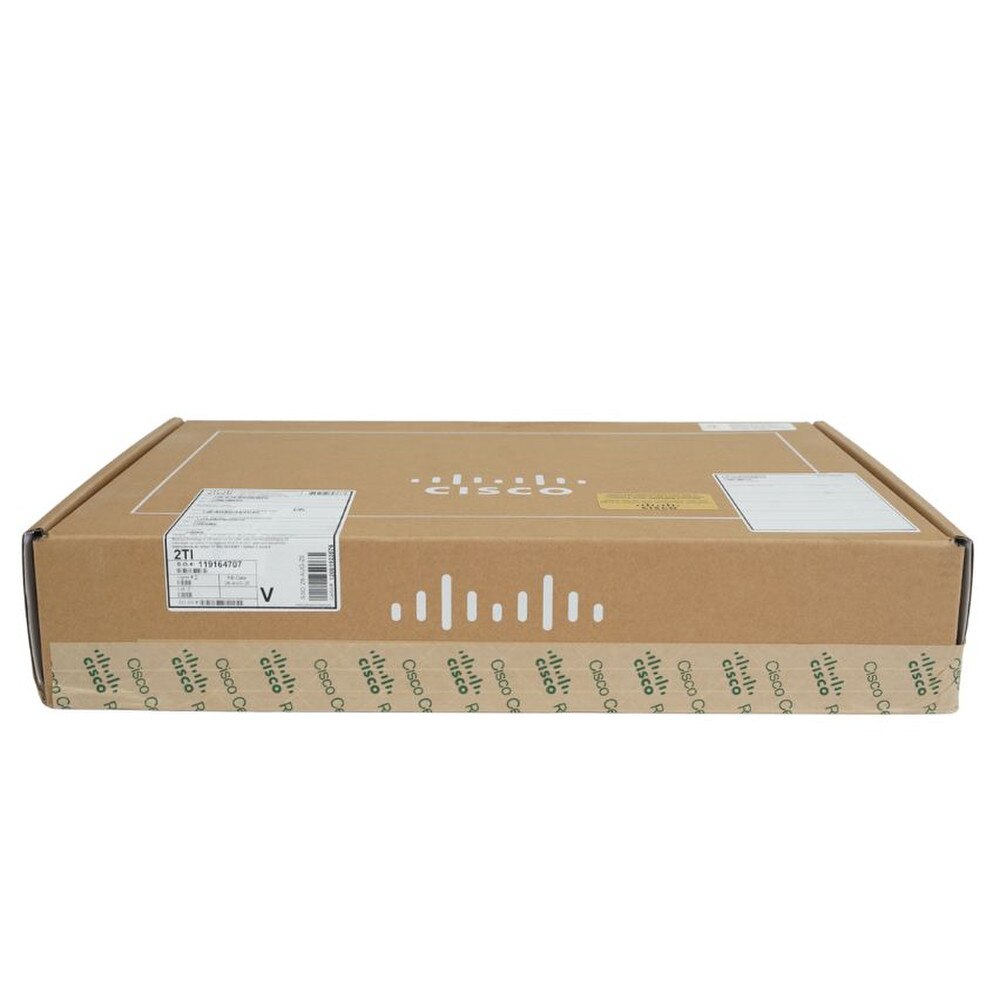
Cisco Catalyst C1300-24XS 24-Port 10G SFP+ Managed Network Switch | Refresh
SKU: C1300-24XS-RF
 Same Day Shipping - Arrives in 3-5 Business Days
 /returns-icon.jpg) 30-day Returns
30-day Returns 
Have one to sell? Click here to sell to us
Same Day Shipping - Arrives in 3-5 Business Days 30-day Returns Have one to sell? Click here to sell to us
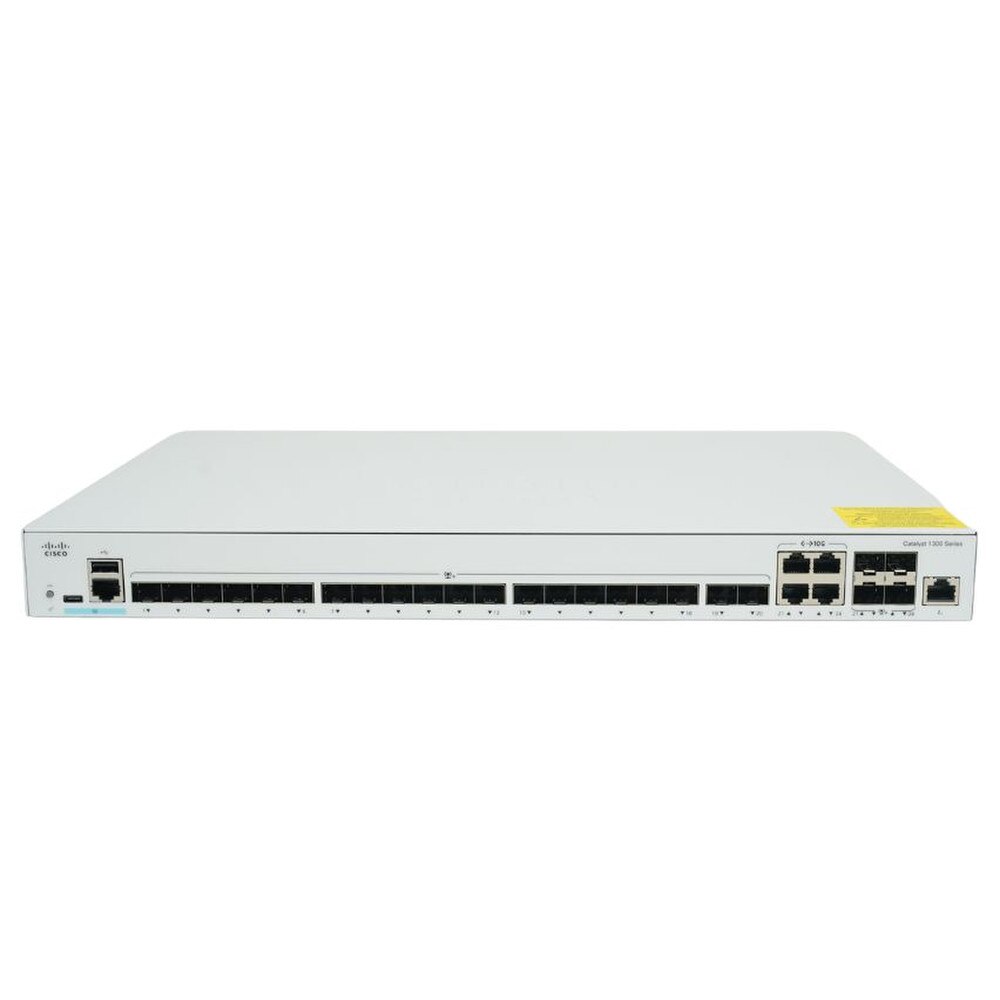
The Cisco Catalyst C1300-24XS 24-Port 10G SFP+ Managed Network Switch was designed for expanding companies that need enterprise-grade dependability, strong security, and maximum bandwidth. With its four adaptable 10G copper/SFP+ combo connections and 20 dedicated 10G SFP+ fiber ports, this switch effectively manages virtualization, high-speed uplinks and data-intensive applications for any contemporary environment. IT organizations can scale with confidence, improve network security and reduce complexity across branch offices or campuses due to Layer 3 management, a 1 GE management port, mobile rack-mountable design and Cisco's cutting-edge technology.
• 24 10G total ports with 20 x 10G SFP+ and 4 x 10G copper/SFP+ combo (hot-swappable modules for fiber or copper flexibility).
• Managed Layer 3 switching that supports VLANs, security protocols, traffic shaping and enterprise routing for full network control.
• 1 GE management port with dedicated high-speed port for out-of-band network administration.
• Hot-swappable, plug-and-play design with simple upgrades and replacements for zero downtime.
• Advanced hardware with ARM dual-core 1.4GHz processor, 1GB RAM DDR4 for smooth multi-gigabit throughput and operations.
• Full stacking and high availability where you cab use uplink and stack ports for scalable, resilient deployments.
• Enterprise-level security with integrated access control, 802.1X authentication and privacy protocols.
• Rack-mountable, compact chassis with 445 x 286 x 44 mm design fits any standard rack with single internal power supply for easy wiring.
• Peace of mind for dynamic organizations scaling their IT infrastructure.
• Cisco transceiver modules & DAC support with seamless integration with existing Cisco networks.
🗹 Maximize core and edge network speed with 10G architecture supports cloud access, virtualization and real-time applications with zero bottlenecks.
🗹 Adaptability for future growth with modular SFP+ and combo ports enable smooth moves between copper or fiber uplinks as needs change.
🗹 Simplify network management with Layer 3 features keep VLANs, routing and security easily organized across multiple sites and teams.
🗹 Ensure reliability and uptime with hot-swappable modules, redundant options and robust hardware minimize downtime and support mission-critical operations.
🗹 Reduce operational costs with modern design streamlines deployment and maintenance for IT managers, with Energy Star compliant efficiency.
🗹 Elevate business security with granular control over device and user access helps protect sensitive data and maintain compliance.
🗹 Future-proof investment with enterprise-grade warranty and Cisco support mean the switch will scale as business demands grow.
| Manufacturer | Cisco |
| Manufacturer Part Number | C1300-24XS-RF |
| Product Name | Cisco Catalyst C1300-24XS 24-Port 10G SFP+ Managed Network Switch |
| Product Type | Networking Switch |
Enclosure Type | Rack-mountable |
Subtype | 10 Gigabit Ethernet |
Ports | 24 x 10GBase-X + 4 x combo 10 Gigabit SFP+/RJ-45 |
Performance | Forwarding rate (64‑byte packets): 357.14 Mpps ¦ Switching capacity: 480 Gbps |
Capacity | MSTP instances: 8 ¦ RPVST+ instances: 126 ¦ Link aggregation groups: 8 ¦ Link aggregation ports: 8 ¦ VLAN IDs: 4093 ¦ IGMP multicast groups: 2000 ¦ IPv4 routes (static): up to 990 ¦ IPv4 interfaces: 128 ¦ ACL rules: 1024 ¦ Priority queues: 8 ¦ Packet buffer size: 1.5 MB |
MAC Address Table Size | 16000 entries |
Jumbo Frame Support | 9000 bytes |
Routing Protocol | STP, static IP routing, RSTP, MSTP, IGMP, IGMPv2, IGMPv3, CIDR, RIP-2, policy-based routing (PBR), MLD, MLDv2, Bounjour |
Remote Management Protocol | CLI, SNMP, Telnet, SSH, SSH-2, DHCP, SCP, HTTPS, HTTP, ICMP, TFTP, Syslog, SNMP 2c, SNMP 3, RMON, RADIUS |
Encryption Algorithm | SSL, MD5 |
Authentication Method | RADIUS, TACACS+ |
Features | Fanless, VLAN support, STP support, CLI management, ATP, FHS, QoS, sFlow, dynamic routing, Zero-Touch Deployment, Port Security, Web authentication, Address Resolution Protocol, ARP inspection, IP source guard, DHCP snooping, IPMB, NDP, router advertisement guard, DHCPv6 guard, layer 3 routing, LAG, port mirroring, eco-friendly button, EEE, RSTP, MSTP support, PVST+, RPVST+, LACP, Protocol-based VLANs support, MAC based VLAN, VLAN management, Private VLAN, PVE, Guest VLAN, GVRP, CPE VLAN, Auto Surveillance VLAN, MVR, Q-in-Q tunneling, TPID, GARP, UDLD, DHCP relay, DHCP server, IGMP snooping, IGMP querier, IGMP proxy, HoL Blocking Prevention, loopback detection, ACL support, BOOTP support, UDP, High Availability, MAC address authentication, BPDU Guard, STP Root Guard, STP loop guard, DAI, DoS protection, SCT, SSD, trustworthy systems, Broadcast Storm Control, Multicast Storm Control, Storm Control, Unicast Storm Control, Unknown Storm Control, DoS attack prevention, WRR, ToS, DSCP based CoS, DiffServ support, TCP congestion, iSCSI traffic optimization, path MTU discovery, DAD, RA guard, MLD snooping, MLD proxy, Telnet server, DNS client, Telnet client, DHCP client, Cisco NG PnP Protocol, IPv4 and IPv6 dual stack, VLAN mirroring, RSPAN, SCP, chip guard, boot integrity, persistent PoE, PoE scheduling, time-based port operation, cable length detection, LLDP, LLDP-MED, reset button |
Compliant Standards | IEEE 802.1x, IEEE 802.3az, IEEE 802.1D, IEEE 802.1w, IEEE 802.1s, IEEE 802.3ad (LACP), IEEE 802.1Q, IEEE 802.1p, IEEE 802.3, IEEE 802.3ab, IEEE 802.3ae, IEEE 802.3an, IEEE 802.3u, IEEE 802.3x, IEEE 802.3z, IEEE 802.3af, IEEE 802.3at |
Processor | X ARM: 1.4 GHz |
RAM | 1 GB DDR4 SDRAM |
Flash Memory | 512 MB |
Status Indicators | System, link/activity/speed, PoE |
Interfaces | 24 x 10GBase-X SFP+ ¦ 4 x 10GBase-T/10GBase-X RJ-45/SFP+ ¦ 1 x console RJ-45 ¦ 1 x USB-C console ¦ 1 x USB ¦ 1 x RJ-45 |
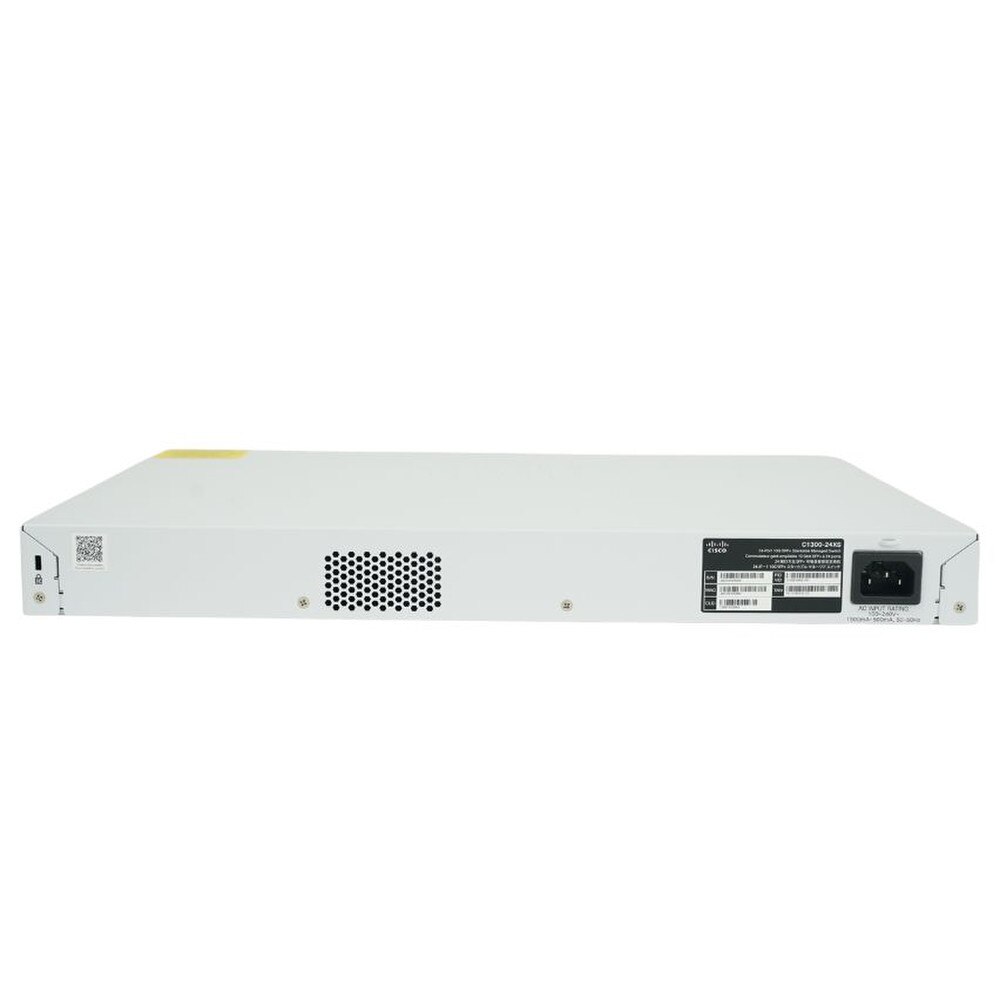
Power Device | Internal power supply |
Voltage Required | AC 100-240 V (50/60 Hz) |
Power Consumption Operational | 58.4 Watt |
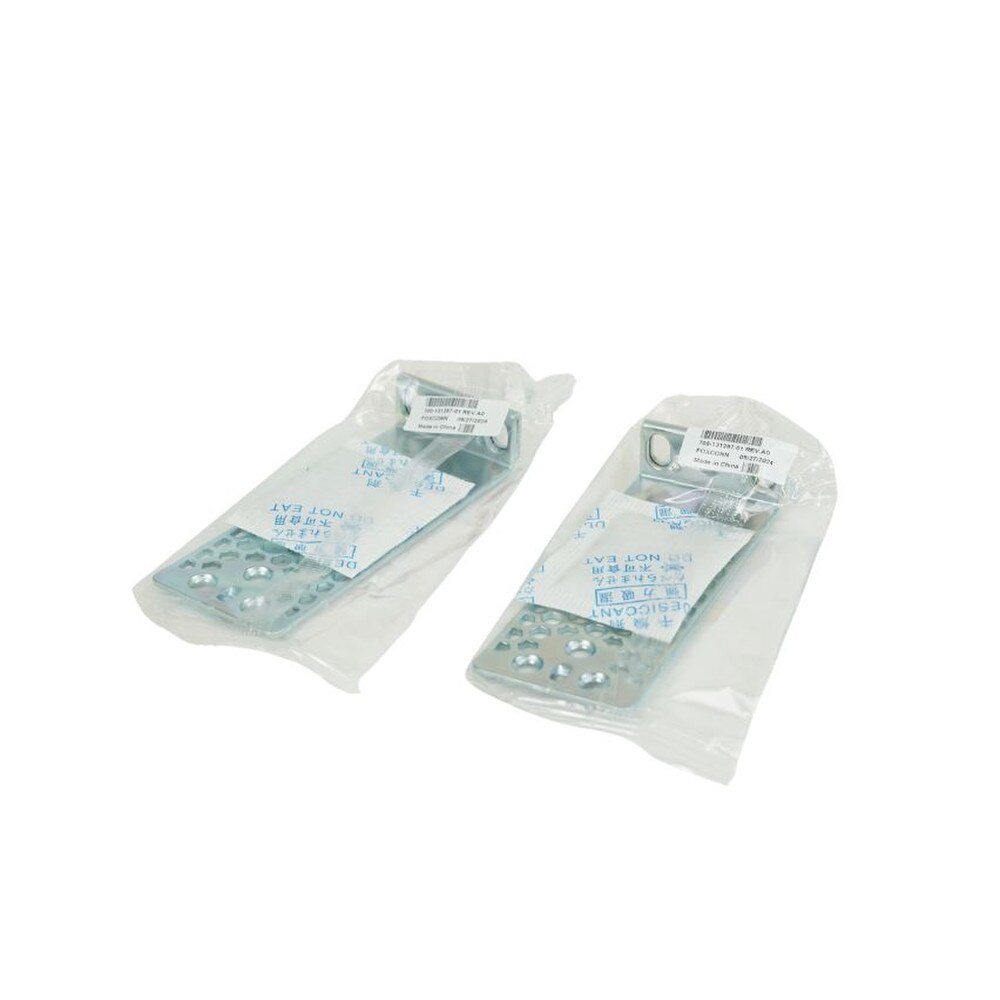
Included Accessories | Pointer card, mounting kit |
MTBF | 2,165,105 hours |
Compliant Standards | Plug and Play, RFC768, RFC783, RFC791, RFC792, RFC793, RFC813, RFC826, RFC879, RFC896, RFC854, RFC855, RFC856, RFC858, RFC894, RFC919, RFC920, RFC922, RFC950, RFC951, RFC1042, RFC1071, RFC1123, RFC1141, RFC1155, RFC1157, RFC1213, RFC1215, RFC1286, RFC1350, RFC1442, RFC1451, RFC1493, RFC1533, RFC1541, RFC1542, RFC1573, RFC1624, RFC1643, RFC1700, RFC1757, RFC1867, RFC1907, RFC2011, RFC2012, RFC2013, RFC2030, RFC2131, RFC2132, RFC2233, RFC2576, RFC2616, RFC2618, RFC2665, RFC2666, RFC2674, RFC2737, RFC2819, RFC2863, RFC3164, RFC3176, RFC3411, RFC3412, RFC3413, RFC3414, RFC3415, RFC3416, RFC4330, RFC4443, RFC4291, RFC2460, RFC4861, RFC4862, RFC1981, RFC4007, RFC3484, RFC5214, RFC4293, RFC3595, CSA 22.2, FCC CFR47 Part 15, UL 62368, WEEE |
Width | 17.5 in |
Depth | 9.4 in |
Height | 1.7 in |
Weight | 6.13 lbs |
Service & Support | Limited warranty - return to factory - lifetime ¦ Technical support - 1 year |
Min Operating Temperature | 23 °F |
Max Operating Temperature | 122 °F |
Humidity Range Operating | 10 - 90% RH (non-condensing) |
Min Storage Temperature | -13 °F |
Max Storage Temperature | 158 °F |
Humidity Range Storage | 10 - 90% RH (non-condensing) |
The combo ports allow either a copper RJ-45 or an SFP+ module; only one of the two can be active per combo port at a time.
No. Only the 4 combo ports support copper 10G (RJ-45). The remaining 20 ports are SFP+ (fiber) only.
Yes, front-panel stacking is supported for up to 8 units, enabling unified management and redundancy.
This model includes internal fans; because of the 10G switching and power load, airflow is important in deployment. Ensure adequate ventilation.
It operates from 100-240 VAC, 50-60 Hz, consuming about 49 W in typical conditions.
This particular model (24XS) is data only (no PoE). It’s designed for high-speed fiber/copper uplinks rather than powering endpoints.
Yes. It supports Layer-3 routing, though exact protocols supported should be verified (e.g. OSPF, static routes, etc.).
You can manage via a dedicated management port, console over RJ-45, USB-C, and through Cisco’s dashboards (web GUI) and CLI.
Yes. It supports QoS policies, link aggregation, VLANs and other traffic-management features to prioritize critical traffic.
Includes IPv6 First Hop Security (ND inspection, router advertisement guard, etc.), ensuring safer dual-stack operation.
Approx. 445 mm × 350 mm × 44 mm (≈17.5" × 13.8" × 1.7"), weight about 4.15 kg (≈9.15 lbs).
Operating temperature from -5 °C to 50 °C; non-condensing humidity between 10% and 90%.
It supports up to 4093 VLANs.
Approximately 993,232 hours according to published specs.
Yes, full Layer-2 switching is supported along with STP, RSTP, MSTP, etc.
For the 24XS model, switching capacity is high (480 Gbps) and forwarding rate “wire-speed”.
Supports IEEE 802.3ad (LACP) for combining ports to increase bandwidth or redundancy.
Yes—you must use compatible SFP+ transceivers (fiber or copper) for the optical/fiber ports. Specifications of module (SR, LR, etc.) will affect distance and fiber type.
Yes. SNMP is supported, and flow / traffic monitoring features are present. Useful for performance tracking, security and troubleshooting.
Use fiber with SFP+ transceivers when you need longer reach or want lower interference, or when cabling already is fiber. Use copper RJ-45 where distance is short (e.g. within racks or short runs), existing copper infrastructure exists, and you want easier install. The combo ports give flexibility.